
Advancing Rainwater Collection Systems for Resilient Water Management
Interview with Heather Kinkade, Executive Director for ARCSA International
1. Tell us about ARCSA International and its impact.
ARCSA International is the leading organization dedicated to advancing the safe, sustainable collection and use of rainwater. For more than three decades, ARCSA has helped move rainwater harvesting from a niche practice into a recognized component of modern water management.
Through professional certification programs, education, and leadership in codes and standards, ARCSA has built a global network of designers, installers, inspectors, and advocates who are shaping how water is used at the building and community scale.
The organization’s impact can be seen in everything from small residential systems to large commercial and municipal projects, where rainwater is being captured, treated, and reused for a variety of applications. More importantly, ARCSA has helped shift the conversation—demonstrating that water resilience begins locally, with the resources we already have.
2. You all started in Texas. What was the catalyst for getting started and what has helped the organization grow outside of Texas?
ARCSA’s roots in Texas are no coincidence. Texas has a long history of water awareness, driven by cycles of drought and a strong culture of self-reliance. Early adopters recognized that capturing rainwater was not only practical, but necessary, and that awareness created the foundation for ARCSA.
What began as a regional effort quickly gained traction because the challenges Texas faced—water scarcity, population growth, and infrastructure strain—are not unique. As other regions began facing similar pressures, the need for practical, decentralized water solutions became more apparent.
The growth beyond Texas has been driven by education, professionalization, and standards development. As ARCSA developed third party certification programs and contributed to codes and guidelines, it created credibility and consistency in the industry. That, combined with increasing interest in sustainability and resilience, has allowed rainwater harvesting—and ARCSA—to expand nationally and internationally.
3. People are familiar with the use of household rain barrels for gathering stormwater for garden use, what are other ways rainwater can be harvested and used?
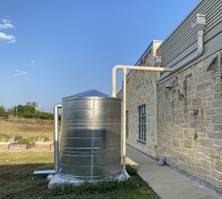
Rain barrels are often the entry point, but they really only scratch the surface of what’s possible with rainwater harvesting.
Today, we’re seeing systems integrated into homes, commercial buildings, and even entire developments. Rooftop rainwater can be captured, filtered, and stored in above- or below-ground tanks, then used for irrigation, toilet flushing, cooling systems, and even potable use when properly treated.
At a larger scale, stormwater is being actively managed through green infrastructure—bioswales, permeable surfaces, and underground storage systems—that not only reduce flooding but also create opportunities for reuse.
We’re also seeing innovation in places people don’t typically think about, such as data centers, industrial facilities, and campuses, where rainwater and stormwater can offset significant demand on municipal supplies.
The key shift is moving from viewing rainwater as runoff to seeing it as a valuable resource that can be used multiple times when properly designed.
4. Why do we need regulations and codes focused on the harvesting of rainwater?
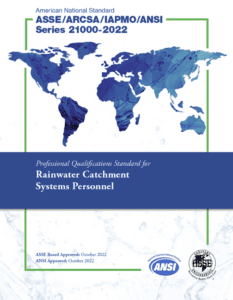 Regulations and codes are essential because they ensure that rainwater harvesting systems are safe, reliable, and properly integrated into the built environment.
As systems become more sophisticated—especially when used inside buildings or for potable applications—it’s critical to address issues like water quality, cross-connection prevention, system design, and long-term maintenance. Codes provide a consistent framework that protects public health while also giving designers, installers, and regulators clear guidance.
Just as importantly, well-developed codes help legitimize the practice. They move rainwater harvesting from being seen as an alternative or experimental approach to being recognized as a standard, viable component of water infrastructure.
Ultimately, good regulation doesn’t limit innovation—it supports it by creating a foundation of trust and consistency.
5. You recently completed a National Water Reuse Action Plan focused on rainwater and stormwater catchment. Can you tell us more about this project and key takeaways?
The National Water Reuse Action Plan provided an important opportunity to elevate rainwater and stormwater catchment within the broader water reuse conversation.
Historically, reuse discussions have focused heavily on wastewater, but this project helped highlight that rainwater and stormwater are often the most accessible and highest-quality sources available at the local level. By capturing and using these sources early in the water cycle, we can reduce demand on centralized systems and improve overall water efficiency.
A key component of this work was identifying and addressing the barriers that have limited broader adoption. Through our related white paper, we outlined challenges such as inconsistent regulations across jurisdictions, lack of awareness and education, limited workforce capacity, and uncertainty around system performance and reliability. These barriers have often slowed implementation, even where the resource and need clearly exist.
The WRAP Action work directly contributed to advancing solutions to those barriers, including the development of Standard 63 System Certification. This certification is a major step forward because it provides a clear, national framework to ensure that rainwater and stormwater systems are designed, installed, and operated in accordance with established best practices.
By aligning systems with Standard 63, we are creating greater confidence among regulators, designers, building owners, and the public. It helps ensure consistency, supports code adoption, and ultimately guarantees that systems are built to meet a recognized national standard. Water Reuse Action Plan | ARCSA International
Perhaps most importantly, this work reinforces that decentralized water strategies—like rainwater and stormwater capture—are not just viable, but essential. When paired with strong standards, trained professionals, and supportive policy, they become a reliable and scalable part of our future water infrastructure.
6. What are you most excited about when thinking about ARCSA International’s work in 2026?
What excites me most is the expanding role of rainwater harvesting within the larger water and resilience conversation.
We’re seeing growing interest in integrating rainwater systems into urban design, large-scale developments, and even emerging sectors like data centers and advanced manufacturing. At the same time, there is increasing recognition that local, decentralized water solutions are critical for addressing both water scarcity and climate impacts.
ARCSA is uniquely positioned to lead in this space—through workforce development, certification, and continued leadership in standards and education.
I’m also excited about the next generation of professionals entering the field. There’s a growing energy around innovation, technology, and systems thinking, and I believe that will push rainwater harvesting into new and impactful directions.
The work ahead is not just about capturing water—it’s about rethinking how we manage water altogether, and ARCSA will continue to play a key role in that transformation.