
How Cleveland Has Become a Global Launchpad for Water Innovation
Interview with Bryan Stubbs – Cleveland Water Alliance’s President & CEO
1. Tell us about Cleveland Water Alliance and its impact.
Cleveland Water Alliance (CWA) accelerates technology to solve global water challenges while strengthening our regional economy. By creating opportunities to test and advance solutions in real-world conditions, CWA allows tech creators to see how their innovations perform in new environments while empowering water managers with access to cutting-edge tools. As a part of this testbed system, CWA has created the largest digitally connected freshwater body in the world, covering nearly 8,000 square miles throughout Ohio. This network of digital sensors and telecommunications coverage acts as a real-world ‘sandbox’ to test sensing and monitoring technology and provide real-time data to regional utilities.
CWA is establishing Ohio as a leading water innovation destination, attracting innovators from around the world to refine, launch, commercialize, and distribute their products and solutions here.
2. What is it about Cleveland and the Great Lakes region that make the area a hub for innovation?
Cleveland’s position as a global water hub is deeply rooted in our history. Decades ago, environmental challenges like the Cuyahoga River fires sparked a massive movement of infrastructure development, water stewardship, and innovation. These early initiatives laid a foundation that has created one of the highest concentrations of water-industry expertise in the world.
The Great Lakes are home to 21% of the world’s surface freshwater, making water central to our regional identity and economy. Our thriving ecosystem anchors a robust network across academia and research institutions, world-renowned public utilities, corporate partners, and maritime interests. CWA supports this network by providing innovators with the specialized infrastructure, industry connections, and business services required to successfully pilot, scale, and establish their companies right here in the region.
3. Your work is focused on fostering a “water economy”. What is the water economy and is there a specific project you all are focused on that is moving the needle forward in the water economy?
The “water economy” encompasses all economic activity related to the treatment, delivery, and management of water: from traditional infrastructure and utilities to recreational use and industrial manufacturing. Within this space, Cleveland Water Alliance operates in a rapidly growing sector driven by supporting the innovation, commercialization, and deployment of cutting-edge technologies that monitor, manage, and protect our water resources. This sector is expanding rapidly, with the global market for water quality monitoring technology alone projected to reach over $10.3 billion by 2032. (source: SNS Pvt, Ltd).
CWA recently facilitated a $6 million foreign direct investment from South Korea aimed at generating drinking water disinfectant chemicals in a safer, cheaper, and more supply-chain-stable way. This project brings South Korean tech company Techwin’s technology to North America for the first time, establishing a cutting-edge pilot system at Avon Lake Regional Water. The system generates high-concentrate sodium hypochlorite right on-site, replacing traditional, hazardous chemical disinfection methods with a safer, more resilient process.
By producing its own disinfectant, Avon Lake Regional Water secures its supply chain against price spikes and eliminates the risks of transporting chlorine gas, keeping costs low for rate payers while creating a new revenue stream through surplus sales.
4. Can you share more about your accelerator testbeds and how you decide on the products to be added to the program?
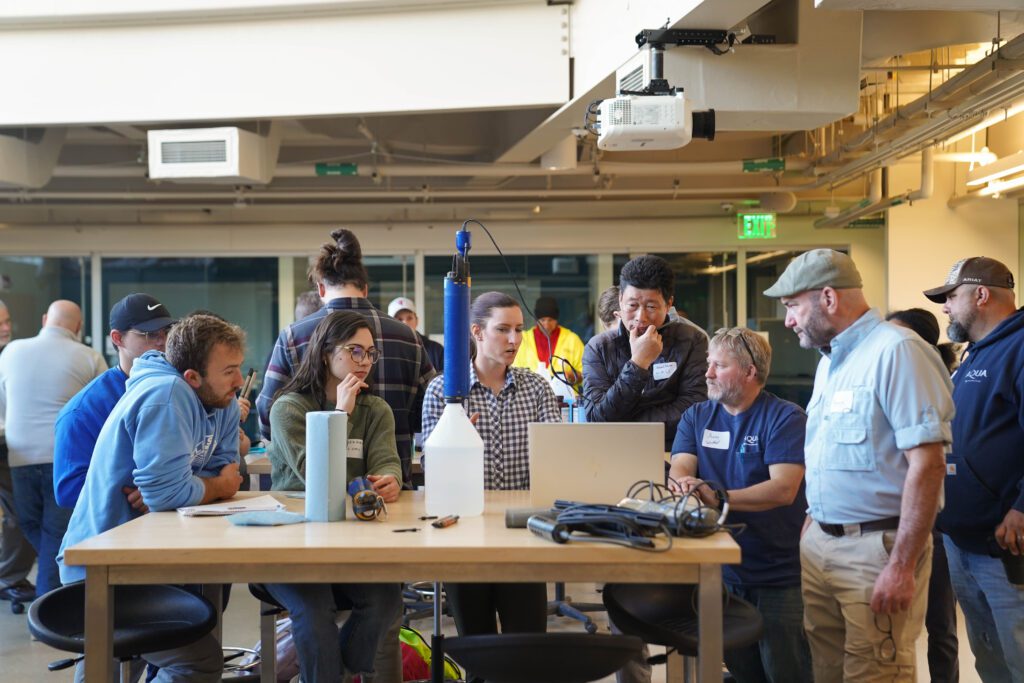
While the demand for real-world water tech testing has never been higher, there are very few places where innovators can actually trial their technology in the field. Cleveland Water Alliance (CWA) is filling this critical market gap through our testbed network, which connects innovators with a wide variety of opportunities to test their technology across a range of real-world conditions. We offer a diverse range of testing environments, including inland lakes, ponds, offshore sites, streams, lab settings, and partner host sites like water utilities.
We focus on market-driven innovation during our tech selection process. Our team tracks global water trends, identifies emerging regulatory shifts, and meets directly with end users to identify the critical challenges they face. These unmet needs create market gaps, and we leverage our testbed to identify and validate technologies best equipped to address them.
5. Can you share the history of the Smart Lake Eerie Watershed Initiative and what you’ve learned since its inception as well as where the project is headed?
Cleveland Water Alliance started with a vision: to create infrastructure throughout the Lake Erie watershed that not only offered real-time water monitoring, but also harnessed the ability to test and trial cutting-edge technologies in real-world conditions. Through support from the State of Ohio, Cuyahoga County, and federal funding via programs such as the U.S. Economic Development Administration (EDA), this vision became a reality.
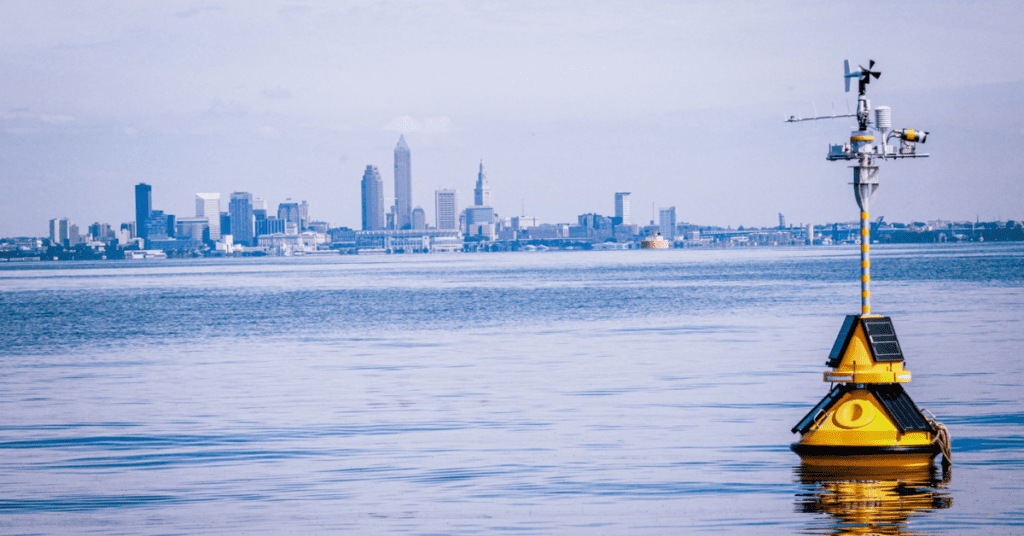
In 2020, the initial infrastructure and network of CWA’s Smart Lake Erie Watershed (SLEW) were established, with additional investments allowing us to expand rapidly over the next few years. SLEW is now the largest digitally connected freshwater body in the world, covering nearly 8,000 square miles with a telecommunications network and over 200 IoT sensors that capture one million annual data points on water conditions, contaminants, and nutrients.
CWA’s smart buoys and SLEW infrastructure are deployed every year throughout the spring and summer months, and they have just been deployed for the 2026 season. Live data can be viewed here. In 2025, this infrastructure expanded into the Ohio River Valley, and moving forward CWA plans to continue expanding this infrastructure to protect and monitor our vital water resources.
6. What are you most excited about when thinking about CWA’s work in 2026?
We are incredibly excited for our 2026 testbed season. This year, we are trialing up to 25 cutting-edge technologies throughout our testbed network, featuring innovative tech like lead service line (LSL) detection, HABs toxicity detection, and autonomous invasive species management. We are also thrilled to be expanding our physical testbed locations, accommodating more technology trials, and expanding our real-time data services for the region. By scaling our capacity and footprint this year, CWA continues to drive the water economy forward while accelerating technology to solve the world’s most pressing water issues.