
Impact Investing Brings Safe Water and Sanitation to Communities
Interview with Genevieve Edens, Head of Impact, WaterEquity

1. Tell us about WaterEquity and its impact.
WaterEquity is an impact investment manager focused on expanding access to safe water and sanitation in emerging markets by mobilizing private capital. We invest across the water value chain through multiple channels. We invest in financial institutions that offer affordable water and sanitation loans mainly for household self-supply and into infrastructure that delivers water and sanitation to vulnerable communities.
Since 2016, WaterEquity has deployed more than $525 million across 23 countries, helping improve access to safe water or sanitation for more than 9 million people. Those investments support better health, better quality of life for women and girls, and resilience for underserved communities.
2. WaterEquity emerged from Water.org. Can you explain what the catalyst was to create WaterEquity.
WaterEquity was established following Water.org’s long‑standing work as a global nonprofit organization focused on expanding access to safe water and sanitation through market-based solutions.
Water.org pioneered a model that harnesses local financial systems to put capital in the hands of people who want to improve their access but can’t afford the upfront cost. Water.org observed that many low‑income households were willing and able to repay small, affordable financing for water and sanitation improvements. They partner with local microfinance institutions, providing technical assistance and other resources to develop loans for water and sanitation.
Through their work, Water.org saw that many financial institutions and water and sanitation businesses faced constraints in accessing long‑term capital needed to scale these offerings.
WaterEquity was created to address this capital gap by mobilizing private investment capital to support the expansion of affordable water and sanitation financing, complementing Water.org’s philanthropic and technical assistance activities.
The model is structured so that Water.org focuses on market development and capacity building, while WaterEquity provides investment capital intended to support scale. Together, these complementary efforts are designed to expand access to affordable water and sanitation solutions in underserved communities.
3. How do you vet the financial institutions and projects you fund?
WaterEquity’s investment management team uses a structured and disciplined due diligence process that evaluates each deal’s risk, return, and impact. The goal is to ensure capital is deployed responsibly and in a way that meets both investor expectations and community needs.
To assess impact, we first screen deals to confirm that proposed activities align with at least one of our core impact areas: improving access, improving freshwater quality, or mitigating the effects of water scarcity. All deals must also benefit vulnerable populations. Once a company or project has passed the screening stage, we dig deeper into multiple aspects of impact and rate each deal on a standard score.
This impact due diligence is on top of our analysis of risk and return typical for any asset manager.
4. What is your approach to working with communities to ensure they can maintain the systems that are funded. Please share a success story of a community who has seen change based on your approach.
WaterEquity takes a demand driven approach. Investing in solutions that community members themselves select, where there is an existing supply chain, helps to ensure the ongoing functioning of facilities.
Our approach starts with investing in local financial institutions that already have trusted relationships within their communities. These institutions provide financing directly to households and lend to local enterprises that deliver water and sanitation products and services. This helps ensure solutions are not only installed but maintained over time.
WaterEquity also works closely with Water.org, which supports the piloting and scaling of water and sanitation lending through technical assistance. That includes strengthening product design, borrower education and institutional practices so solutions remain viable long after the initial loan.
Impact Story: Jasvir Kaur lives in Barnala village in Dhanaula, Punjab, with her husband and their two children. When she moved into the family’s semi-permanent home after marriage, there were no water or sanitation facilities. The family relied on hand pumps for water and used open fields for toilets.

As her children grew, they faced the same challenges. Two years ago, Jasvir took a loan to buy stitching and knitting equipment, which helped her contribute to the household income of approximately $215 per month. Later, the family secured another loan of ~$419 from Muthoot Microfin Ltd., one of the leading and fastest-growing microfinance institutions in India, to build an indoor toilet and bathroom. The 24-month loan had monthly payments of approximately $22. With these funds, they also installed a water storage tank to improve daily access.
Today, the family has clean water and private sanitation at home. They estimate they save about 2–3 hours a day, which Jasvir uses for work, childcare, and household tasks. Their overall health has improved, and the children can focus more on school. Inspired by their experience, neighbors are now exploring similar solutions to improve their own homes.
WaterEquity provided $12 million in 2022 and an additional $8 million in 2024 to expand Muthoot’s water and sanitation lending initiatives, supporting low-income women such as Jasvir, with essential improvements. To date, Muthoot has provided over 93,000 WASH micro-loans with an expected target reach of ~ 488,900 people.
5. In 2024, you expanded to work on Infrastructure Resilience, can you explain what this means and share an example of a project that has been funded.
Rising temperatures and changing weather patterns are worsening water pollution and scarcity and threatening safe water and sanitation access. The local impacts of climate change are often experienced first by vulnerable groups that are already disproportionately affected by the water crisis. Experts predict that climate vulnerability will continue to be most common in places where government and the private sector are failing to provide basic services and infrastructure.
Investing in climate resilient water and sanitation has the potential to disrupt this trajectory. Water and sanitation infrastructure that can anticipate, respond to and recover from climate hazards, will provide more reliable service and enhance the resilience of community members who rely on that infrastructure.
In 2024, WaterEquity launched the Water & Climate Resilience Fund to invest in climate‑resilient water supply and sanitation infrastructure. The strategy focuses on projects and growth companies across the water value chain, including bulk water supply, distribution, wastewater treatment and water reuse. These investments are designed to improve water quality, expand access, and reduce vulnerability to scarcity.
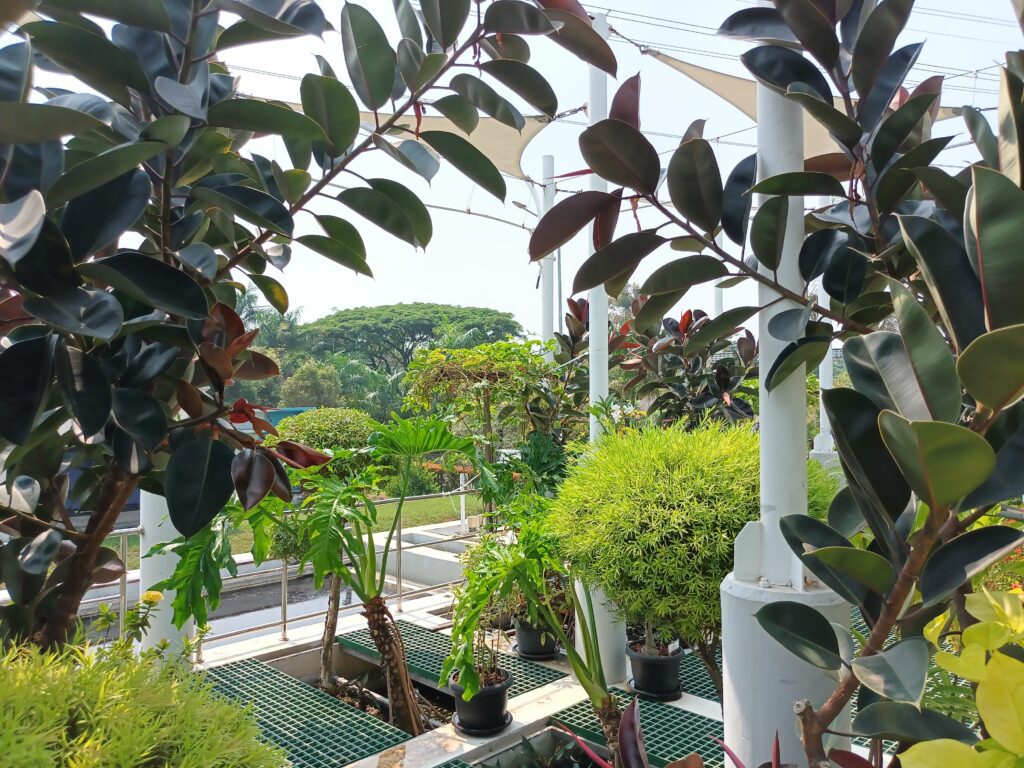 In December 2025, WaterEquity invested in Organica Water, a provider of decentralized, nature-based wastewater treatment solutions, pictured above). The investment supports Organica’s expansion across South and Southeast Asia and parts of Africa, where over 70% of wastewater is discharged untreated. Organica’s modular systems increase treatment capacity and improve effluent quality in dense urban and industrial areas. This investment marks Water & Climate Resilience Fund’s entry into the wastewater sector and aligns with its strategy to support climate-resilient, decentralized solutions that expand access to safely managed sanitation and strengthen community resilience
6. What are you most excited about when thinking about WaterEquity’s work in 2026?
In 2026, our focus includes scaling the WaterEquity Everspring Fund, an evergreen investment vehicle designed to help low-income households finance basic water and sanitation improvements so it can continue providing long‑term, flexible capital to financial institutions expanding water and sanitation lending. We are also continuing to deploy capital through the Water & Climate Resilience Fund, supporting infrastructure and enterprises that help communities adapt to increasing water stress and climate shocks.