
Scaling Solutions in Public Health
Interview with Danielle Bayer, Interim President, Evidence Action
1. Tell us about Evidence Action and its impact.
There’s a frustrating gap in global health: proven interventions that could save millions of lives often sit underdelivered because no one has figured out how to scale them effectively. We take what’s already proven — deworming, water chlorination, syphilis screening, vitamin supplementation — and do the hard operational work to make them function at the scale of entire nations.
Working hand-in-hand with governments, we’ve now reached about 550 million people — one in every 15 people on Earth — with health solutions that otherwise wouldn’t exist at this scale. We’re not chasing novel interventions, we’re cracking the delivery challenges that keep proven ones from reaching the people who need them.
Our Safe Water Now program is a good example. We deliver chlorine to communities through multiple models — chlorine dispensers and in-line chlorination devices in Africa, a new voucher pilot, and a technical assistance partnership with the Government of India. Same goal, different delivery approaches tailored to context.
The results across our portfolio have been outsized: over 16,000 children’s lives saved, an estimated $23 billion in productivity gains, and programs now transitioning to full government ownership.
2. How does your water portfolio fit with your other work?
Every program in our portfolio shares the same DNA: proven evidence, exceptional cost-effectiveness, and clear pathways to scale through government systems. Water represents one of the largest opportunities to save lives cost-effectively: diarrheal disease remains a leading killer of children under five, yet water quality has been dramatically underfunded compared to water access. Governments have invested billions in pipes without ensuring what flows through them is safe.
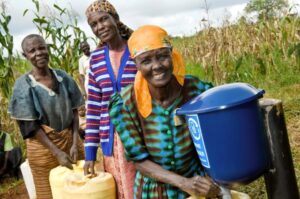
The evidence for chlorination is robust. The World Health Organization recommends chlorine as a primary method for disinfecting drinking water, and it’s been standard practice in high-income countries for over a century. It’s also remarkably affordable — chlorine treatment can cost just cents per person per year, making it one of the most cost-effective ways to prevent childhood mortality. Yet in low- and middle-income countries, systematic chlorination remains an afterthought in water infrastructure projects.
3. You state that your work is data driven. What does this look like when approaching a new issue or group that you’ll be working with? Can you provide an example?
Data drives every decision, from selecting interventions to refining delivery. Our cost-effectiveness team models each program’s potential impact using a rigorous framework: we examine the counterfactual (what would happen without us), calculate actual delivery costs, and quantify health benefits. Our monitoring, learning, and evaluation teams design the systems and manage data collection to measure actual impact — real-time information that feeds back into our cost-effectiveness calculations so we’re continuously refining our understanding of what’s working.
A good example is our recent work on small-quantity lipid nutrient supplements, or SQ-LNS, for young children, which research shows can prevent approximately one in four child deaths and significantly reduce stunting, wasting, and anemia. But when we first analyzed the intervention, it wasn’t particularly cost-effective at a blanket scale. So we dug deeper. By identifying opportunities to geo-target delivery to the highest-need areas, the economics transformed entirely. It became one of the most cost-effective opportunities ever to enter our pipeline: we expect to save more than 2,300 lives in Nigeria at less than $1,000 per life in the next year.
That’s the difference data makes: same intervention, radically different impact based on how and where you deliver it.
4. How do you find interventions to support and scale?
We’re essentially looking for the unicorns of international development: interventions that are life-saving, low-cost, and ready to scale through government systems, but that no one has figured out how to deliver effectively yet.
Our Accelerator takes an almost venture capital approach to finding them. We screen potentially high-impact interventions across six stages, evaluating evidence quality, cost-effectiveness, and scalability at each step. The bar is intentionally high: only about 2% of interventions make it through the full pipeline. We’re not just asking “does this work?” – we’re asking “can this work for millions, at a cost that competes with the best opportunities in global health?”
Ideas come from multiple sources: WHO guidelines, academic research like the Lancet, our country teams who understand government priorities firsthand, and external researchers. But what distinguishes our process is equal focus on delivery innovation. Many interventions have strong evidence but remain the lowest-hanging fruit in development — proven solutions that people just aren’t implementing yet. We figure out how to crack the delivery challenges, then partner with governments to scale.
5. Can you share more about your chlorination work in India?
India’s Jal Jeevan Mission achieved something remarkable: expanding rural household tap connections from 17% to 81% in just six years. But infrastructure alone doesn’t guarantee safe water. Without systematic chlorination, communities still face typhoid, cholera, and diarrhea—a leading killer of children under five.
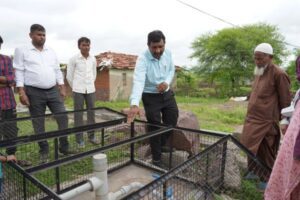 As a technical partner at national and state levels, we’re helping install in-line chlorination devices while building government capacity to sustain and scale the program. The result is systemic change: chlorination is shifting from afterthought to core infrastructure priority. Our light-touch model — small embedded teams supporting surveys, tenders, and budget allocation — maximizes philanthropic leverage while states fund implementation. If chlorination becomes nationwide policy, the systems we’re testing could deliver safe water to tens of millions.
6. What excites you most about 2026?
There are two themes in water and sanitation that have our water team particularly excited. First, partnerships are accelerating the reach of safe water. With more than 2 billion people worldwide lacking access to safe drinking water, solving this challenge requires collaboration beyond any single organization. In 2025, we deepened partnerships with water infrastructure providers in Malawi and Uganda (like Innovation: Africa and GOAL Uganda). By layering chlorination onto infrastructure they’re already building, communities receive safe water from the start rather than requiring us to build systems from scratch.
Second, chlorination is finally getting the spotlight it deserves. After years of championing water chlorination as a life-saving intervention that can reduce under-five mortality by more than 20%, it’s energizing to see this proven solution gaining momentum. At UNC Water Week, our team was thrilled to see water treatment on the agenda every single day. The need is massive, and we welcome more attention to this space.