
Finding Solutions with the Great Lakes and St. Lawrence Cities Initiative
Tell us about The Great Lakes and St. Lawrence Cities Initiative (Cities Initiative) and its impact.
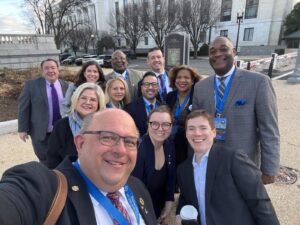
The Great Lakes and St. Lawrence Cities Initiative is a multinational coalition of over 350 mayors and other municipal and Indigenous government executives working together to protect our fresh water and promote economic prosperity for the benefit of current and future generations. We create opportunities for advocacy, collaboration, and education to help local leaders better support their communities and the shared resources they depend on.
What is one issue facing the Great Lakes region that you all are looking to find solutions for?
The Cities Initiative is eager to increase shipping on the Great Lakes-St. Lawrence Seaway, which contributes significantly to the health of our regional economy yet is only operating at about 50 percent of its full capacity. Through the implementation of our Economic Transformation Action Plan and purposeful collaboration with port cities and other regional stakeholders, our aim is to boost traffic on the Seaway by 30 percent over the next 10 years. Expanding commerce on the Seaway will not only strengthen our regional economy and provide jobs to our residents, but also contribute to important goals like reducing emissions and improving public safety on our roads.
Your organization relies on members from across the region coming together on shared areas of interest. Can you share an example of how they work together to bring about change in the region.
The Great Lakes and St. Lawrence River Region has historically been the global paradigm for international water cooperation, with important examples including the Great Lakes Compact and the Great Lakes Water Quality Agreement. The Cities Initiative is committed to upholding that legacy of collaboration, founded on the idea that communities that share resources — in this case, 84 percent of North America’s surface fresh water — should also share solutions for the challenges they collectively face. Each year, members gather in Washington, D.C. and Ottawa to collectively advocate for federal investments in freshwater protection and discuss other critical issues impacting our region. In coming together, they compel our federal governments to work with communities across the region to promote our continued economic prosperity and preserve our precious freshwater resources.
The Cities Initiative recently launched the Fresh Coast Economic Transformation Action Plan. What are the current opportunities for economic transformation in the region?
Our region is home to the largest freshwater ecosystem in the world, providing drinking water for more than 40 million people and underpinning the third largest economy in the world. We recently launched our new Economic Transformation Action Plan as a 10-year roadmap to bring companies and jobs to our region and better protect the freshwater resources that make our communities dynamic and strong. The plan offers concrete steps for municipalities and other stakeholders to attract and retain industries committed to sustainability, strengthen waterborne commerce and tourism, revitalize waterfronts, and expand the use of clean energy. In doing so, we hope to transform our region into a world-renowned Fresh Coast Economic Corridor with the capacity to help the world innovate for the future while improving quality of life for our own communities.
You launched a lead service line (LSL) replacement program. What has the impact of this program been on local communities?
According to the EPA, there are roughly 9.2 million lead service lines in the United States, many of which are disproportionately clustered in Great Lakes communities. The Cities Initiative launched the Great Lakes Lead Pipes Partnership at the White House Water Summit in 2024 — a first-of-its-kind mayor-led partnership between the cities of Chicago, Detroit, and Milwaukee — to help these leaders highlight emerging best practices, surmount common challenges, and replicate success from city-to-city. Paired with the Mayors Commission on Water Access and our LSL replacement technical assistance partnership with EPIC, we are working to help municipal leaders expedite infrastructure upgrades and reduce the risk of lead exposure in drinking water.
What are you most excited about when thinking about the Cities Initiative’s work in 2026?
Our new Economic Transformation Action Plan included 76 recommended actions for local governments and other stakeholders, plus 12 proposed Cities Initiative programs to support our members. From implementing the Action Plan to expanding our coastal resilience technical-assistance programs, regional collaboration on LSL replacement and more, we are excited for another year of working with our partners to help Great Lakes communities grow and thrive!